Artificial intelligence (AI) is transforming the way businesses connect with customers. From personalized recommendations to automated campaigns, the power of artificial intelligence in marketing is helping companies improve customer experiences, increase efficiency, and achieve better results. As AI technology continues to evolve, marketers can make smarter decisions, deliver more relevant content, and maximize their return on investment.
In this guide, you’ll learn what AI marketing is, its benefits, practical applications, challenges, best practices, and future trends.
Table of Contents
- What is Artificial Intelligence in Marketing?
- Why AI is Important in Modern Marketing
- The Power of Artificial Intelligence in Marketing
- Benefits of AI in Marketing
- Common Uses of AI in Marketing
- AI Marketing Analytics
- Challenges of AI in Marketing
- Best Practices for Using AI in Marketing
- The Future of AI in Marketing
- Conclusion
What is Artificial Intelligence in Marketing?
Artificial intelligence in marketing refers to the use of AI technologies such as machine learning, natural language processing, and predictive analytics to improve marketing activities. AI analyzes large amounts of customer data, identifies patterns, predicts future behavior, and automates repetitive tasks.
Instead of relying solely on manual work, marketers can use AI to create personalized customer experiences, optimize campaigns, and make data-driven decisions faster and more accurately.
Why AI is Important in Modern Marketing
Today’s customers expect personalized experiences. They want businesses to understand their preferences and provide relevant recommendations. Meeting these expectations manually is difficult, especially when dealing with thousands or millions of customers.
AI helps marketers process large amounts of data in real time, making it easier to understand customer behavior and deliver the right message to the right audience at the right time.
This is why businesses of all sizes are investing in AI-powered marketing solutions.
The Power of Artificial Intelligence in Marketing
The power of artificial intelligence in marketing lies in its ability to combine data analysis, automation, and personalization into one intelligent system. AI can analyze customer interactions, predict future actions, and recommend the most effective marketing strategies.
It enables businesses to:
- Understand customer behavior.
- Create personalized marketing campaigns.
- Automate repetitive marketing tasks.
- Improve customer engagement.
- Increase conversion rates.
- Make faster business decisions.
- Reduce marketing costs.
- Improve overall marketing performance.
Rather than replacing marketers, AI enhances their capabilities by handling time-consuming tasks and providing valuable insights.
Benefits of AI in Marketing
Better Customer Personalization
AI analyzes customer preferences, browsing history, purchase behavior, and engagement patterns to deliver highly personalized experiences. Personalized marketing improves customer satisfaction and increases the likelihood of conversions.
Improved Customer Targeting
AI helps businesses identify audiences that are most likely to be interested in their products or services. This improves advertising efficiency and reduces wasted marketing budgets.
Faster Content Creation
Generative AI tools can assist marketers in creating blog posts, product descriptions, email campaigns, advertisements, and social media content more efficiently while maintaining quality.
Marketing Automation
AI automates repetitive tasks such as:
- Email marketing
- Social media scheduling
- Customer segmentation
- Lead scoring
- Chatbot responses
- Campaign optimization
Automation allows marketing teams to focus on strategy and creativity.
Better Decision Making
AI processes large datasets within seconds, providing valuable insights that help marketers make informed decisions based on real-time information instead of assumptions.
Higher Return on Investment (ROI)
By improving targeting, personalization, and campaign performance, AI helps businesses increase conversions while reducing unnecessary marketing expenses.
Common Uses of AI in Marketing
Businesses are using AI across many areas of marketing.
Personalized Product Recommendations
Online stores use AI to recommend products based on customer interests, browsing history, and previous purchases.
Email Marketing
AI personalizes subject lines, recommends the best sending times, segments audiences, and improves email engagement.
Chatbots and Virtual Assistants
AI-powered chatbots provide instant customer support, answer common questions, and guide customers through the buying process at any time of day.
Predictive Analytics
AI predicts customer behavior, including purchase likelihood, customer lifetime value, and potential churn, allowing businesses to act proactively.
Social Media Marketing
AI helps schedule content, identify trending topics, analyze audience engagement, and recommend improvements for future campaigns.
Content Generation
Generative AI assists marketers in producing high-quality content, including articles, advertisements, captions, and marketing copy, while saving time and effort.
AI Marketing Analytics
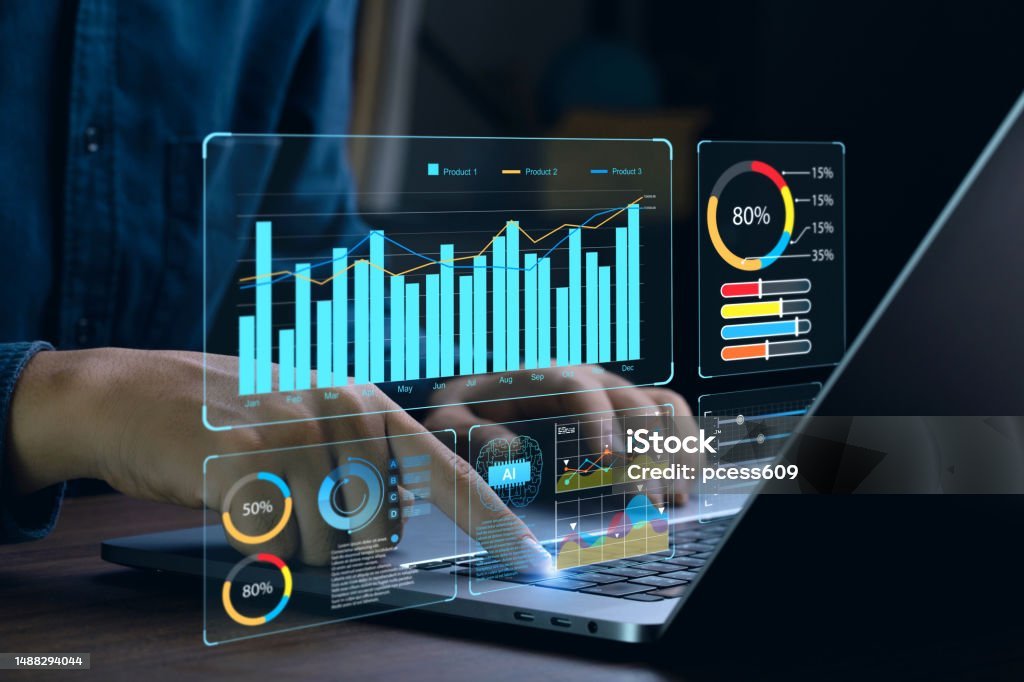
One of the greatest strengths of AI is its ability to analyze massive amounts of marketing data quickly and accurately.
Important AI marketing metrics include:
- Customer engagement
- Website traffic
- Conversion rates
- Click-through rates
- Email open rates
- Customer acquisition cost
- Return on investment (ROI)
- Customer lifetime value
These insights help businesses continuously improve their marketing strategies.
Challenges of AI in Marketing
Although AI offers many advantages, businesses should also understand its limitations.
Data Privacy
Organizations must protect customer information and comply with privacy regulations when collecting and using data.
Data Quality
AI performs best when trained using accurate, complete, and reliable data. Poor-quality data can lead to incorrect insights and ineffective marketing decisions.
Human Oversight
AI should support marketers rather than replace them. Human creativity, judgment, and strategic thinking remain essential for successful marketing campaigns.
Technical Skills
Implementing AI tools may require employee training to ensure they are used effectively and responsibly.
Best Practices for Using AI in Marketing
To maximize the power of artificial intelligence in marketing, businesses should follow these best practices:
Define Clear Marketing Goals
Identify what you want AI to achieve, such as increasing sales, improving customer engagement, or generating more qualified leads.
Use High-Quality Data
Ensure your customer data is accurate, organized, and regularly updated.
Combine AI with Human Creativity
Use AI for automation and analysis while allowing marketers to focus on storytelling, branding, and customer relationships.
Monitor Performance
Regularly evaluate AI-generated recommendations and marketing results to identify opportunities for improvement.
Protect Customer Privacy
Maintain transparency about data collection practices and follow all applicable privacy regulations.
The Future of AI in Marketing
AI will continue to become more advanced in the coming years. Future developments are expected to include:
- More personalized customer experiences.
- Smarter predictive analytics.
- Improved voice search optimization.
- Advanced AI-generated videos and images.
- Better conversational AI assistants.
- Greater automation across marketing channels.
- Enhanced customer journey optimization.
Businesses that embrace AI early will be better positioned to compete in an increasingly digital marketplace.
Conclusion
The power of artificial intelligence in marketing is changing how businesses attract, engage, and retain customers. AI helps marketers automate repetitive tasks, analyze customer data, personalize experiences, and improve marketing performance with greater speed and accuracy.
While challenges such as data privacy and implementation exist, the benefits far outweigh the limitations when AI is used responsibly. By combining AI technology with human creativity and strategic planning, businesses can build stronger customer relationships, increase efficiency, and achieve sustainable growth in today’s competitive digital landscape.